
The Tyrannical Father
How a need for control stunts the proper development of our boys & a conversation around spanking
Treign Up · May 1, 2023 · 9 min read

Originally sent to the Treign Up Tactics newsletter on May 1, 2023. References to “this newsletter” or “this podcast” mean that original edition.
Monthly Meet-Ups: We had a great morning with our group on Saturday creating an experience where the boys learned the value of Serving Selflessly, one of the 6 character traits we focus on for Treign Up. If you are in the Richmond area, reach out and join us on our next monthly father-son outing on May 20th, where we’ll be going on an arduous hike to talk about and experience the importance of toughness. Hope to see you there!
The Tyrannical Father
In our previous newsletter, we examined the Devouring Mother archetype and its harmful effects on a child's development. Today, we will explore the Tyrannical Father archetype, which can lead to similar consequences through different means. This archetype represents an authoritarian, controlling, and abusive father who may unintentionally harm their child due to personal insecurities or a desire to maintain control.
Here are some of the most common traits of an authoritarian parent/ Tyrannical Father:1
Demanding but non-responsive
Little warmth or nurturing
Little explanations for punishment
Few choices for children
Impatient with misbehavior
Mistrusting
Unwilling to negotiate
Shaming
There are some short-term pros that you might see from an authoritarian parenting model such as good behavior, safety, and high performance. But, the longer-term effects can be devastating for a child and can lead to rebellion, over-reliance on rules, reduced self-esteem, and emotional withdrawal. 2
What the Bible Says
While there is no direct reference to the tyrannical father archetype in the Bible, there are passages that warn against using power and authority to control others. For example, in Colossians 3:21, it says, "Fathers, do not embitter your children, or they will become discouraged." This can be interpreted as a warning against using emotional abuse or harsh criticism to control one's children.
Additionally, the Bible emphasizes the importance of treating others with kindness and respect, which can serve as a model for fathers who may be struggling with the tyrannical father archetype. For example, in Ephesians 4:32, it says, "Be kind and compassionate to one another, forgiving each other, just as in Christ God forgave you." We also know that the fruit of the spirit includes peace, patience, kindness, gentleness, and self-control.
But as you saw in last week’s newsletter -
there are a number of verses that directly call us to train and discipline our children.
So, the question is - how do we find the radical middle where we can discipline in a way that Jesus would have if he had been a parent?
“Striking” The Right Balance
“Begin with the end in mind.”
What is our goal as parents?
We are stewards of our children for God and are called to create an environment that trains, disciplines, and encourages them to have a relationship with Jesus Christ. But, it is a great question to ask - how much discipline is too much? How do we strike the right balance between discipline and freedom? Discipline to know who God is and get into the habits of obedience that God calls us to while also allowing for them to learn what it means to have the freedom to make their own decisions and determine their own path in life. In a sense, I think this is a question at the heart of the Tyrannical Father.
Treign Up is committed to promoting this balance in our programs. We believe in giving our children responsibility and decision-making authority as early as possible to encourage competence and self-reliance. This approach counters the Tyrannical Father archetype and fosters spiritual, physical, and mental development.
Discipline 101
Let’s start by defining discipline. Here are a few:
the practice of training people to obey rules or a code of behavior, using punishment to correct disobedience.
control gained by enforcing obedience or order
training that corrects, molds, or perfects the mental faculties or moral character
to train or develop by instruction and exercise especially in self-control
As seen in the above definitions, discipline is often associated with consequence. It is important to realize that, in our goal as stewards, we need to maximally influence our children to our end goal. Influence is far more than just giving consequences. There are other sources of influence far more powerful that we should strive to enact to move them into becoming a true disciple of Christ. We have a newsletter coming out soon on this topic which we’re excited to share but I’ll insert one of our favorite models here as a teaser for what is to come as it fits perfectly into this topic as well. It’s known as the 6 Sources of Influence by Joseph Grenny.
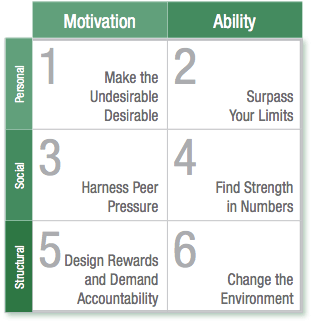
All that I will point to in this model is that there are a number of different ways that we can INFLUENCE our children and discipline - providing consequences - is just a small fraction (box #5) of what we should be leveraging when it comes to helping to improve their character, behaviors, and beliefs.
I don’t think that consequences should always be our go-to. As a father - what will be far more influential in shaping them is:
How you live your life (Modeling the way)
How you love your wife
How you eat
How you dress
How you handle conflict
What you emphasize as the culture of your home
How you pray and worship
How you respond to difficulty
Who you surround yourself and your family with
What and how you encourage and reward
However, there is more than enough biblical text, in my opinion, to support consequence-driven parenting. I do see things like spanking as necessary, effective, and biblical. What is important, though, is to talk through HOW these consequences are handed out. So, let’s dive into everyone’s favorite parenting topic: spanking - and how we can do this wisely as an example of how to hand out consequences in a way that helps out meet our parenting goal.
Spare the Rod, Spoil The Child
Here are some of the biggest criticism that I hear regarding spanking is:
“All spanking does is teach your child that violence is an OK way to manage conflict.”
“I wouldn’t hit my husband. He wouldn’t hit me. Why would I hit a tiny, defenseless version of ourselves?”
“We don’t use our hands to purposefully hurt anyone in our household.”
“All hitting or ‘biting back’ does is teach a child that the bigger/stronger person gets to do whatever they want.”
Here is what the “Science” says:
The American Academy of Pedriatrics has deemed that the science shows that spanking is ineffective at best and harmful at worst.
The United Nations has decreed that hitting a child as a form of punishment is a violation of human rights. It is a form of violence and violates article 19 of the convention..and should be banned in all contexts.
So, if the UN says it - it must be true. Right?
What I’d be curious to see in these studies is HOW the consequences were handed out. Do the conclusions of these take into account the ways in which they were carried out and other elements of the culture of the home? Such as if these were handed out by one parent in the home or out of anger and with no clarity or discussion around why the punishment was being handed out. If so, I would argue that, although there may be correlation, causation is more directly linked to other more serious issues that lead to some of the correlations such as higher probability of the child becoming violent.
What is true, though, is that I know a few close friends that were never spanked growing up and are the epitome of what it means to be good, Christian men. So, I would be willing to agree that spanking is not absolutely necessary, but there is no way to make a case biblically that it should NOT be used.
So, here’s how we’ve approached spanking and punishment:
Speak to them about their identity ALL the time. Encourage them every moment you get and praise them for their behaviors related to character traits.
For example, Koen the other day scored a goal in soccer and when he came to the sideline I did not celebrate his goal, I celebrated what led to the goal. As we are speaking wisdom over him - I said, “Koen, way to hustle! Great effort. You are so wise to do that.” For any spanking that is given, there should be 10+ of these types of moments.
Minimize the number of rules
We have three rules that, if broken, a spanking might be given. They are:
Disrespect (To teach the importance of honoring others)
Disobey (To root out rebellion and defiance)
Lying (To reinforce the freedom and power that comes from the truth)
Instead of having 100 “Don’t do this rule” - provide consequences based on the principle and always come back to it if your giving a punishment. This makes it easier for you and them both to remember.
Be consistent
Inconsistency brings confusion which is not helpful when trying to create a certain culture in your family and discipline your children.
Never do it out of anger
It is always best to be patient and calm. Although righteous anger is good, there are minimal instances in when this should be allowed and most of these would be due to protect their or others’ safety.
Be VERY CLEAR as to the why
ALWAYS explain why the spanking is being given. Even ask them to give you an answer. You know you are communicating well when they are able to give you the reason (as there should be very few of them). Remember that you also only have about 3 seconds. Don’t give a 15-minute speech about it.
Make it the last resort
In many ways, spanking and other forms of punishment can be lazy parenting. It should not be your go-to for every bad behavior.
Don’t make it about you
It is easy to see misbehavior as a direct rebellion. Be attuned to your child’s needs and realize that all misbehavior is not due to this reason.
Ask them to forgive you for your shortcomings as a father
I once spanked Koen and was wrong to do so. I felt so bad. That night, I asked for his forgiveness and told him that I am not perfect and had a conversation around my shortcomings and around how God is the only good and perfect father. It was a good moment between the two of us.
Stop when the time is right
There is a point in a boy’s life when they begin to see spanking as a direct conflict. I’ll do more research on when this coming of age is but usually when a boy starts going through puberty is a good time to think even more critically about if you should be spanking.
Never less time…
Consequences handed out should never be less time with you, the family, or from church.
In Summary
The tyrannical father is not an archetype we as a father should emulate. It brings our children down and doesn’t drive our children to be the best they can be. An overreliance on control and authority is an easy way for this to come about. It’s essential that we find the radical middle that is primarily disciplining through encouragement and handing out consequences in the right ways for the right reasons.
Discipline via punishment is loving. I disagree that spanking should be viewed as “hitting for conflict management”. It is loving to train your children and connect the idea that living outside of God’s guidelines for our lives brings pain to ourselves and others.
You should be overly intentional with them. Be:
Attuned
Responsive
Engaged
Be able and willing to handle their big emotions
Regulate their effect
Willing to repair harm
Remember that how our children view us as their father will be the way they initially view our Father in heaven. Our Father above is a good father one who should be both loved and respected, feared and honored. Know that there is no perfect father outside of him. You will not be perfect. However, we are declaring that God will do great things in your children’s lives even in your imperfections.
1https://www.verywellmind.com/what-is-authoritarian-parenting-2794955
2https://www.parents.com/parenting/better-parenting/style/authoritarian-parenting-the-pros-and-cons-according-to-a-child-psychologist/